Article Review - Commercial Video Games as Preparation for Future Learning
- Justin Matheson
- Jun 23, 2025
- 4 min read

Updated: Aug 20, 2025
Here's a stat that'll make you rethink your next Call of Duty session: Stanford researchers found that students who played commercial video games for just 15 hours scored 27% higher on history tests—not because the games taught them facts, but because it prepared their brains to learn better.
That's the core finding from Dylan Arena's study on "Commercial Video Games as Preparation for Future Learning." While most game-based learning research focuses on custom educational games, Arena asked: What if the games people already love playing could make them better learners?
This review will unpack Arena's methodology, findings, and what they mean for anyone designing learning experiences in 2025.
Research Summary
Citation: Arena, D. (2022). Commercial video games as preparation for future learning. ETC Press. https://press.etc.cmu.edu/file/download/1537/ae1ccc00-63c8-4939-933a-3a496d27ba15
Arena's study tackled a deceptively simple question: Can playing commercial off-the-shelf (COTS) games at home improve learning in formal educational settings? He randomly assigned 102 community college students to three groups:
Call of Duty 2 players (n=34): Focused on battles and tactical scenarios
Civilization IV players (n=35): Emphasized nations, diplomacy, and strategy
Control group (n=33): No gameplay assigned

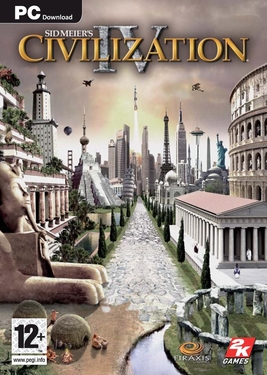

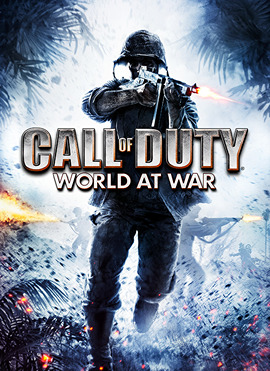
All participants played their assigned games for at least 15 hours over five weeks at home. Then came the clever part—the "Preparation for Future Learning" (PFL) framework. Instead of testing what students learned from games directly, Arena measured how well gameplay prepared them to learn from a 20-minute World War II lecture.
The results? No difference on the pre-lecture test (as expected), but a meaningful boost (Cohen's d = .27) on the post-lecture assessment. The games didn't teach history facts—they primed students' brains to absorb and retain information more effectively.
Even better, when asked open-ended questions about WWII scenarios, students' responses aligned with their game experiences. Civilization IV players asked more strategic, nation-focused questions. Call of Duty 2 players zeroed in on tactical, battle-oriented details.
Critical Analysis
Strengths:
Arena designed this as a randomized field trial with intention-to-treat analysis—the gold standard methodology that makes the findings solid. He deliberately chose traditional multiple-choice tests (the kind educators actually use) rather than custom assessments that might inflate results. The five-week at-home gameplay period mirrors real recreational use, not artificial lab conditions.
The PFL framework itself is brilliant. Instead of asking "Did games teach X?" Arena asked "Did games prepare learners to absorb X better?" That's a game-changer for how we think about educational impact.
Limitations worth noting:
The effect size (d = .27) is small-to-moderate. While statistically significant, we're talking about modest practical gains. The study focused on one content area (WWII history) with specific games—we can't assume these results generalize to all subjects or all COTS games.
The pre-lecture test had poor reliability (α = .43), suggesting many participants were guessing randomly. This makes the baseline comparison less concrete, though I don’t think it invalidates the core finding about post-lecture improvement.
Sample diversity was strong ethnically and socioeconomically, but participants were all community college students taking social science courses so this is not necessarily representative of a larger group of learners.
Practical Implications for Game-Based Learning
1. Flip Your Game Integration Strategy Stop trying to cram entire curricula into custom games. Instead, identify commercial games your learners already enjoy and design formal instruction that builds on those experiences. A sales team playing strategic games? Another option is to identify the skills you want learners to develop, then match it with a game whose mechanics promote that skill.
2. Design "Bridge Activities" Between Gaming and Learning Arena's lecture connected WWII themes to game mechanics without explicitly mentioning the games. Create similar bridge content—debrief sessions, reflection prompts, or case studies that help learners transfer insights from their recreational gaming into professional contexts.
3. Leverage Different Game Types for Different Learning Outcomes The study showed game-specific preparation effects. Action games like Call of Duty primed tactical thinking, while strategy games like Civilization enhanced systems thinking. Match your game recommendations to your learning objectives: want better crisis management? Suggest real-time strategy games. Need improved analytical thinking? Point toward complex simulation games. Do you have a bunch of non–gamers? Suggest mobile, card, or board games.
Broader Connections & Further Reading
Arena's work connects beautifully with James Paul Gee's research on "affinity spaces" and how games create communities of practice around learning (Affinity Spaces). It also echoes Kurt Squire's findings on Civilization III in high school classrooms (Replaying History), though Arena's approach requires less classroom disruption.
Conclusion
Arena's study proves what many of us gamers suspected (and what other literature reviews and studies have suggested): the games people love playing aren't distractions from learning—they're aiding it. The key is designing formal instruction that builds bridges between recreational gaming experiences and professional skill development.
Ready to experiment? Try this: survey your next training cohort or group of students about their gaming habits, then design reflection activities that connect those experiences to your learning objectives. You might be surprised how a casual Minecraft player's building strategies inform project management approaches.
Students' favorite games aren't competition—they're curriculum gold mines. Follow Rift for evidence-based strategies on connecting Call of Duty to history lessons, Civilization to social studies, and other commercial games to serious learning. Ready to transform your approach? Let's talk about implementing preparation-for-future-learning in your classroom or training environment.
JM


Comments